
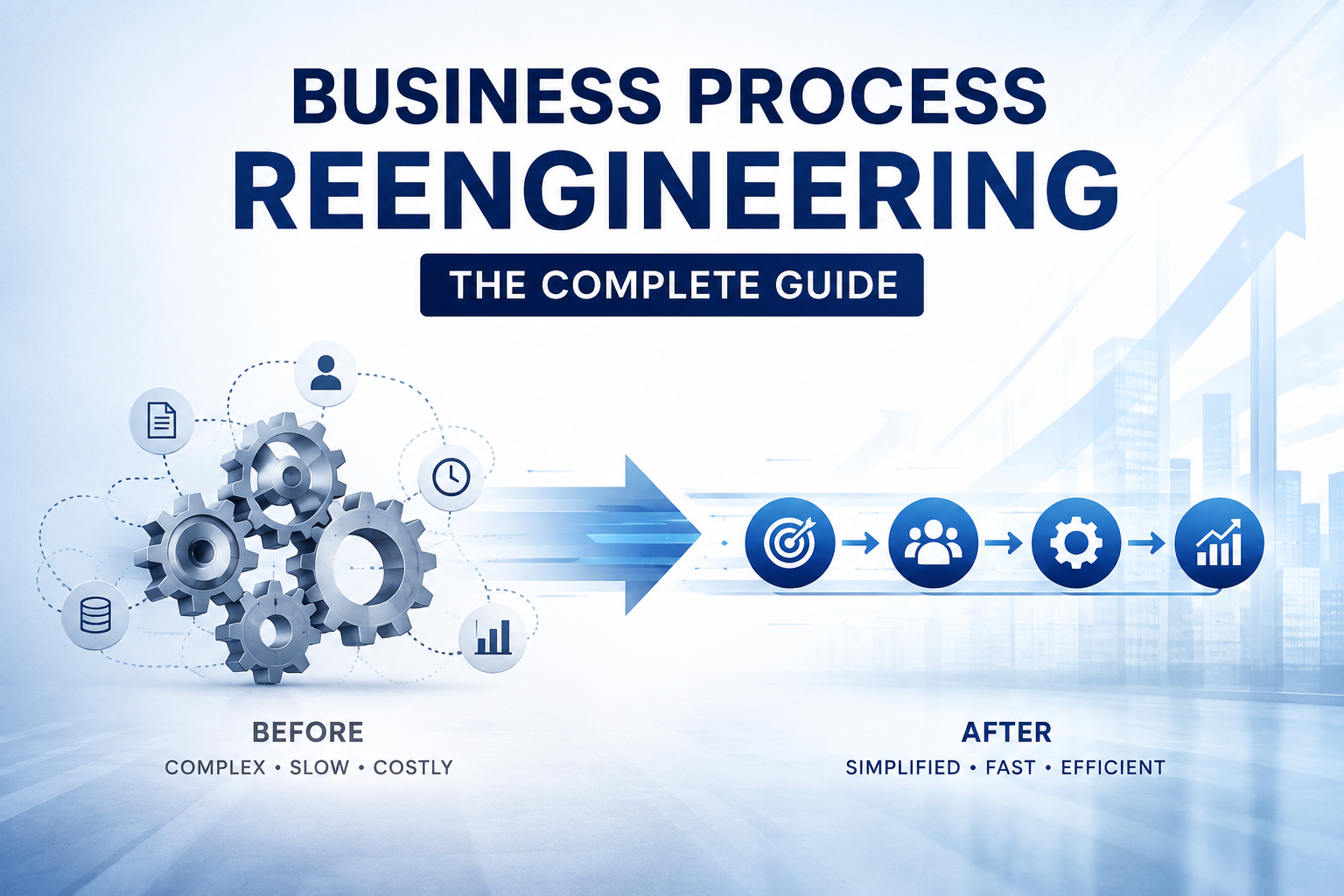
In today’s rapidly evolving business landscape, organizations face increasing pressure to improve efficiency, reduce costs, enhance customer experiences, and remain competitive. While incremental improvements can help, there are times when businesses need more than small adjustments—they need transformational change.
This is where Business Process Reengineering (BPR) comes into play.
Business Process Reengineering is a strategic approach that involves fundamentally rethinking and redesigning business processes to achieve dramatic improvements in performance, productivity, quality, and profitability. Rather than making minor enhancements to existing workflows, BPR focuses on reinventing how work is performed to create significant business value.
This comprehensive guide explores what Business Process Reengineering is, its benefits, key principles, implementation steps, challenges, and best practices for success.
What Is Business Process Reengineering?
Business Process Reengineering (BPR) is the practice of analyzing and redesigning core business processes to achieve substantial improvements in critical performance measures such as:
- Cost
- Quality
- Service
- Speed
- Customer satisfaction
- Operational efficiency
The concept gained widespread attention through the work of management experts Michael Hammer and James Champy, who advocated for organizations to rethink traditional ways of working and focus on process-based improvements rather than departmental structures.
BPR asks a fundamental question:
“If we were starting this business today, how would we design this process?”
The answer often leads to innovative solutions that eliminate outdated practices and create more efficient operations.
Why Is Business Process Reengineering Important?
Many organizations operate with processes that have evolved over years or even decades. These processes often become:
- Complex
- Inefficient
- Costly
- Difficult to scale
- Resistant to change
Business Process Reengineering helps organizations break free from these limitations and create processes that align with current business goals and market demands.
Key Benefits of BPR
1. Improved Operational Efficiency
Reengineering eliminates unnecessary steps, reduces bottlenecks, and streamlines workflows, allowing organizations to complete tasks faster and more effectively.
2. Reduced Costs
By removing redundant activities and improving resource utilization, businesses can significantly lower operational expenses.
3. Enhanced Customer Experience
Optimized processes lead to faster response times, improved service delivery, and greater customer satisfaction.
4. Increased Productivity
Employees spend less time on manual and repetitive tasks, enabling them to focus on higher-value activities.
5. Better Quality and Consistency
Standardized processes reduce errors and improve the reliability of products and services.
6. Greater Agility
Organizations become more adaptable to market changes, customer expectations, and technological advancements.
Core Principles of Business Process Reengineering
Successful BPR initiatives are built on several fundamental principles.
Focus on Processes, Not Departments
Traditional organizations often operate in functional silos. BPR focuses on end-to-end processes that deliver value to customers.
Challenge Existing Assumptions
Reengineering requires questioning long-standing practices and identifying whether they still serve a purpose.
Design Around Outcomes
Processes should be structured around desired results rather than existing organizational structures.
Leverage Technology
Modern technologies can automate tasks, improve communication, and enable more efficient workflows.
Eliminate Non-Value-Adding Activities
Every process step should contribute directly to customer value or business objectives.
Key Business Processes Suitable for Reengineering
Organizations can apply BPR across various functions, including:
Sales and Customer Acquisition
- Lead management
- Sales workflows
- Customer onboarding
Human Resources
- Recruitment
- Employee onboarding
- Performance management
Finance and Accounting
- Invoice processing
- Budget approvals
- Financial reporting
Supply Chain Management
- Procurement
- Inventory management
- Logistics coordination
Customer Service
- Complaint handling
- Service delivery
- Customer support workflows
The Business Process Reengineering Lifecycle
Step 1: Identify Processes for Improvement
Begin by selecting processes that significantly impact business performance.
Common indicators include:
- High operational costs
- Customer complaints
- Delays and bottlenecks
- Poor productivity
- Quality issues
Step 2: Analyze Existing Processes
Document current workflows to understand:
- Process steps
- Stakeholders involved
- Time requirements
- Pain points
- Performance gaps
This stage helps identify inefficiencies and opportunities for improvement.
Step 3: Define Business Objectives
Clearly establish what the organization aims to achieve, such as:
- Cost reduction
- Faster turnaround times
- Improved customer satisfaction
- Increased profitability
Defined objectives provide direction for the reengineering effort.
Step 4: Design New Processes
Develop future-state processes that eliminate inefficiencies and align with organizational goals.
This may involve:
- Automation
- Workflow redesign
- Role restructuring
- Technology integration
Step 5: Implement the New Process
Deploy redesigned processes through careful planning and change management.
Key activities include:
- Employee training
- Communication plans
- Technology deployment
- Performance monitoring
Step 6: Measure and Optimize
Track performance metrics to ensure the redesigned process delivers expected results.
Continuous improvement helps sustain long-term success.
Common Challenges in Business Process Reengineering
While BPR offers significant benefits, organizations may encounter challenges such as:
Resistance to Change
Employees often feel uncertain about new processes and organizational changes.
Lack of Leadership Support
Executive sponsorship is essential for driving transformation initiatives.
Poor Communication
Without clear communication, employees may misunderstand project goals and expectations.
Insufficient Data
Inaccurate or incomplete data can lead to poor decision-making during process redesign.
Technology Misalignment
Technology should support business objectives rather than drive unnecessary complexity.
Best Practices for Successful BPR
Secure Executive Commitment
Leadership involvement ensures alignment, resources, and organizational support.
Engage Employees Early
Employees who participate in the redesign process are more likely to support implementation.
Focus on Customer Value
Every process improvement should contribute to a better customer experience.
Use Data-Driven Decision Making
Analyze performance metrics to identify opportunities and measure outcomes.
Embrace Continuous Improvement
Business Process Reengineering should serve as a foundation for ongoing operational excellence.
The Role of Business Transformation Consulting
Many organizations partner with business transformation specialists to maximize the success of BPR initiatives.
Professional consultants bring:
- Industry expertise
- Process improvement methodologies
- Change management experience
- Technology integration knowledge
- Performance measurement frameworks
This external perspective often accelerates transformation efforts and improves outcomes.
How Ethikcorp Supports Business Process Reengineering
At Ethikcorp, we help organizations transform operations through strategic business process reengineering, operational excellence, organizational transformation, and performance optimization initiatives.
Our approach focuses on identifying inefficiencies, redesigning critical business processes, and implementing sustainable improvements that drive measurable business results. By aligning people, processes, and technology, we help organizations achieve greater efficiency, profitability, and long-term growth.
Conclusion
Business Process Reengineering is a powerful strategy for organizations seeking transformational improvement rather than incremental change. By fundamentally redesigning business processes, companies can reduce costs, improve efficiency, enhance customer satisfaction, and build a stronger competitive advantage.
In an increasingly dynamic business environment, organizations that continuously evaluate and optimize their processes are better positioned for sustainable success. Whether you’re looking to streamline operations, improve productivity, or accelerate growth, Business Process Reengineering can provide the foundation for meaningful and lasting business transformation.