
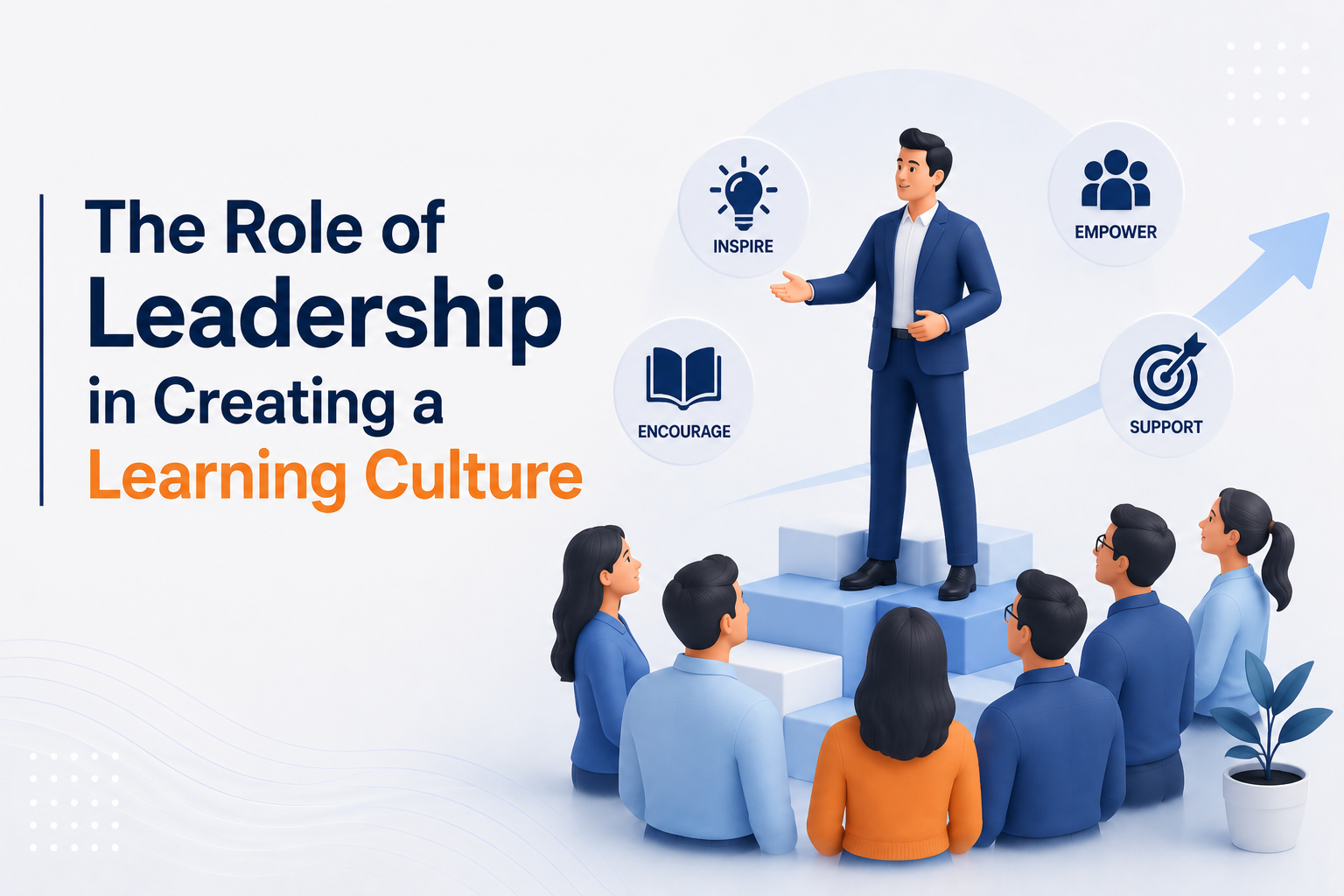
In an era of constant disruption, rapid technological innovation, and evolving workforce expectations, organizations can no longer rely on traditional approaches to remain competitive. Sustainable success depends on an organization’s ability to continuously learn, adapt, and develop its people. While investments in technology and business processes are essential, it is strong leadership that creates a culture where learning becomes a strategic advantage and continuous improvement becomes part of everyday work.
At the centre of this transformation is leadership.
A learning culture does not emerge through training programmes alone. It is shaped by leaders who encourage curiosity, support professional development, and create an environment where employees feel empowered to learn, experiment, and improve. When learning becomes part of everyday work rather than an occasional activity, organizations become more resilient, innovative, and better prepared for future challenges.
Creating a learning culture is therefore not solely the responsibility of the Learning and Development (L&D) function. It begins with leadership and is sustained through consistent behaviours, strategic priorities, and a shared commitment to continuous improvement.
What Is a Learning Culture?
A learning culture is an organizational environment where continuous development is encouraged, supported, and embedded into daily operations. Employees are motivated to expand their knowledge, develop new skills, share insights, and apply what they learn to improve performance.
Unlike traditional training approaches that focus on one-time learning events, a learning culture promotes ongoing development through collaboration, coaching, feedback, and practical experience.
Organizations with strong learning cultures view development as a long-term investment rather than a short-term initiative. They understand that as markets evolve, their people must evolve with them.
Why Leadership Matters More Than Ever
Leadership sets the tone for organizational culture. Employees often take cues from leaders regarding what behaviours are valued and rewarded.
If leaders prioritize learning, encourage questions, and invest in employee development, learning naturally becomes part of the organization’s identity. Conversely, if learning is viewed as optional or secondary to immediate operational demands, employees are less likely to pursue development opportunities.
Leadership influences:
- Employee mindset
- Organizational priorities
- Decision-making
- Innovation
- Collaboration
- Accountability
- Long-term business performance
When leaders demonstrate a commitment to learning, they send a clear message that growth is everyone’s responsibility.
Leading by Example
One of the most effective ways leaders create a learning culture is by becoming active learners themselves.
Employees notice when leaders seek feedback, attend development programmes, read industry insights, participate in workshops, or openly discuss lessons learned from experience.
Leaders who demonstrate curiosity create permission for others to do the same.
Rather than presenting themselves as having all the answers, effective leaders acknowledge that learning is an ongoing process. This openness builds credibility and encourages employees to continuously improve without fear of judgment.
Learning becomes more authentic when employees see leadership embracing development alongside them, a theme Harvard Business Review has explored in depth, noting that leaders who take on the role of teacher and coach, rather than delegating it entirely to L&D, tend to build stronger problem-solving skills and higher motivation across their teams.
Creating Psychological Safety
Employees are unlikely to learn if they fear making mistakes.
Innovation, creativity, and continuous improvement require an environment where individuals feel comfortable asking questions, sharing ideas, and challenging existing ways of working.
Leadership plays a vital role in creating psychological safety by encouraging respectful discussion, listening to different perspectives, and treating mistakes as opportunities for learning rather than reasons for blame.
When employees know they can contribute without fear of criticism, collaboration improves and knowledge sharing becomes more natural. This isn’t just theory, Google’s own research into team effectiveness, known as Project Aristotle, identified psychological safety as the single biggest factor separating high-performing teams from the rest, ahead of who was actually on the team.
Organizations that promote psychological safety often experience stronger engagement, better problem-solving, and increased innovation.
Aligning Learning with Business Goals
Learning initiatives are most effective when they support organizational objectives.
Leadership should ensure that development activities contribute directly to strategic priorities such as improving customer experience, strengthening leadership capability, driving digital transformation, increasing operational efficiency, or preparing employees for future roles.
Rather than offering generic training, organizations should identify capability gaps and develop targeted learning initiatives that address real business needs, the same principle that underpins why learning and development functions as a genuine competitive advantage rather than a checkbox exercise.
When employees understand how their development contributes to organizational success, learning becomes more meaningful and impactful.
Encouraging Continuous Feedback
Learning does not happen only in classrooms or workshops. It also occurs through everyday conversations, coaching, and constructive feedback.
Leaders who provide regular guidance help employees identify strengths, address improvement areas, and develop confidence in their abilities.
Effective feedback should be timely, specific, and focused on growth rather than criticism.
Similarly, leaders should actively seek feedback from their teams. This demonstrates humility, strengthens trust, and reinforces the idea that learning applies to everyone regardless of position.
A culture of open feedback accelerates both individual and organizational development.
Investing in Leadership Development
Strong learning cultures require capable leaders at every level of the organization.
Developing future leaders should therefore be an ongoing priority rather than a reactive response to succession needs.
Leadership development programmes should focus not only on technical expertise but also on communication, coaching, emotional intelligence, strategic thinking, decision-making, and change leadership.
Managers who possess these capabilities are better equipped to support employee growth, navigate organizational change, and inspire high-performing teams.
Investing in leadership development strengthens organizational resilience while preparing the next generation of leaders.
Recognizing and Rewarding Learning
People naturally repeat behaviours that are recognized and valued.
Organizations should celebrate employees who actively pursue development, share knowledge, mentor colleagues, or apply new skills to improve business outcomes.
Recognition does not always require financial incentives. Public appreciation, career progression opportunities, expanded responsibilities, and leadership visibility can significantly reinforce a learning mindset.
When learning achievements are celebrated, employees understand that development is an integral part of organizational success.
Making Learning Part of Everyday Work
A learning culture cannot rely solely on scheduled training sessions.
Leaders should encourage employees to learn through real business challenges, cross-functional collaboration, project participation, mentoring, peer discussions, and continuous reflection.
Simple practices can make learning a natural part of daily operations, including:
- Sharing industry insights during team meetings
- Conducting project review sessions to identify lessons learned
- Encouraging knowledge-sharing workshops
- Supporting mentoring and coaching relationships
- Providing access to learning resources
- Creating opportunities for employees to apply new skills
Embedding learning into everyday work helps employees retain knowledge and develop confidence through practical experience.
Removing Barriers to Learning
Despite recognizing its importance, many organizations struggle to create sustainable learning cultures because employees face obstacles such as heavy workloads, limited resources, or competing priorities.
Leadership can address these challenges by allocating dedicated learning time, providing access to relevant development opportunities, and ensuring managers support employee growth.
When learning is consistently postponed due to operational pressures, organizations risk falling behind competitors whose workforces continue to develop new capabilities.
Supporting learning requires intentional planning rather than relying on employees to find time independently.
Measuring the Impact of a Learning Culture
Creating a learning culture should deliver measurable business value.
Leadership can evaluate progress using indicators such as:
- Employee engagement levels
- Internal promotion rates
- Employee retention
- Leadership effectiveness
- Productivity improvements
- Customer satisfaction
- Innovation outcomes
- Learning participation and application
- Business performance metrics
Rather than measuring attendance alone, organizations should assess how learning influences employee behaviour, decision-making, collaboration, and organizational results.
This ensures development investments remain aligned with business priorities.
The Long-Term Business Impact
Organizations that foster a learning culture are better equipped to respond to uncertainty, embrace innovation, and develop future leaders from within.
Employees become more adaptable, collaboration improves, and continuous improvement becomes part of the organization’s identity.
Perhaps most importantly, a learning culture creates an environment where people feel valued, supported, and empowered to reach their full potential.
As industries continue to evolve, organizations that prioritize learning will be better positioned to sustain growth, strengthen performance, and maintain a competitive advantage.
Conclusion
Creating a learning culture is not achieved through training programmes alone. It requires leadership that consistently demonstrates curiosity, encourages development, supports collaboration, and aligns learning with business strategy.
When leaders invest in people, they invest in the future of the organization. Employees gain the confidence to innovate, adapt to change, and contribute at a higher level, while the organization benefits from improved performance, stronger leadership pipelines, and greater resilience. Building this kind of culture matters just as much during periods of active change, where employee buy-in during business transformation determines whether a learning culture takes root or stalls before it starts.
In an increasingly competitive business landscape, organizations that embed learning into their culture are better prepared to navigate change and achieve sustainable success. Leadership is not simply responsible for managing performance, it is responsible for creating an environment where learning becomes a continuous driver of growth.
At Ethikcorp, our Corporate Training Solutions division works with leadership teams to build the coaching, communication, and change-leadership capabilities that make a learning culture sustainable, not just aspirational. We also partner with organizations through our Business Transformation division to embed learning into change from day one, rather than treating it as an afterthought.
If your organization wants to build leadership capability that sustains a genuine learning culture, get in touch with our team to talk through your goals.
Frequently Asked Questions
Why is leadership important in creating a learning culture?
Leaders influence organizational values, behaviours, and priorities. By promoting continuous learning and supporting employee development, they create an environment where learning becomes part of everyday work.
What are the characteristics of a learning culture?
A learning culture encourages continuous improvement, knowledge sharing, collaboration, feedback, innovation, and professional development across all levels of the organization.
How can leaders encourage continuous learning?
Leaders can lead by example, provide coaching and feedback, support development opportunities, recognize learning achievements, and allocate time and resources for employee growth.
What are the business benefits of a learning culture?
Organizations benefit from improved employee engagement, stronger leadership, increased innovation, better adaptability, higher retention, and improved overall business performance.
How does a learning culture support business transformation?
A learning culture equips employees with the skills and mindset needed to embrace change, adopt new technologies, solve complex problems, and contribute to successful transformation initiatives.